Stopping the Wrong Channel Before It Shipped
2025 · Enterprise SaaS · AI Strategy & Architecture · Oracle
Evaluating Generative-AI Delivery Paths Under Executive Pressure
Nobody asked me to evaluate the platform architecture. But when the direction being discussed had structural problems that would surface long after engineering committed to it, waiting for a formal assignment wasn't the right call. I stepped in to build the decision framework that would make the right answer visible — and defensible — to the people who needed to act on it.
Impact
✓ Stopped a non-viable architectural bet before engineering commitment
✓ Validated strategy through platform engineering independent review
✓ Redirected AI investment toward a controllable, extensible foundation
✓ Preserved future optionality while enabling short-term delivery
The Problem
Executive leadership directed the team to explore generative-AI conversations delivered through external messaging apps, using Apple iMessage as the reference model.
The appeal was clear: familiar UX, no new app surface, and natural-language interaction powered by AI.
The risks were not.
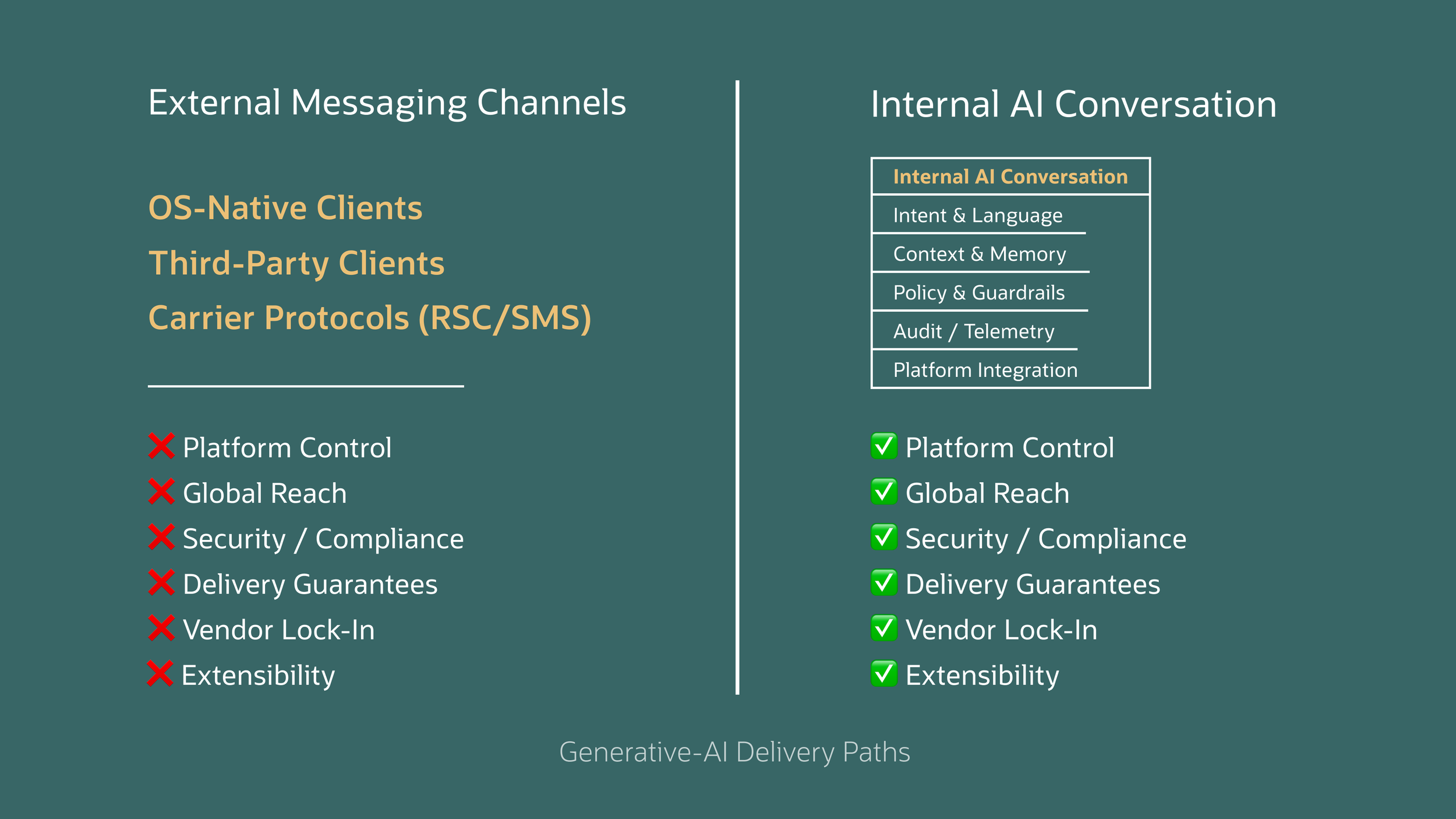
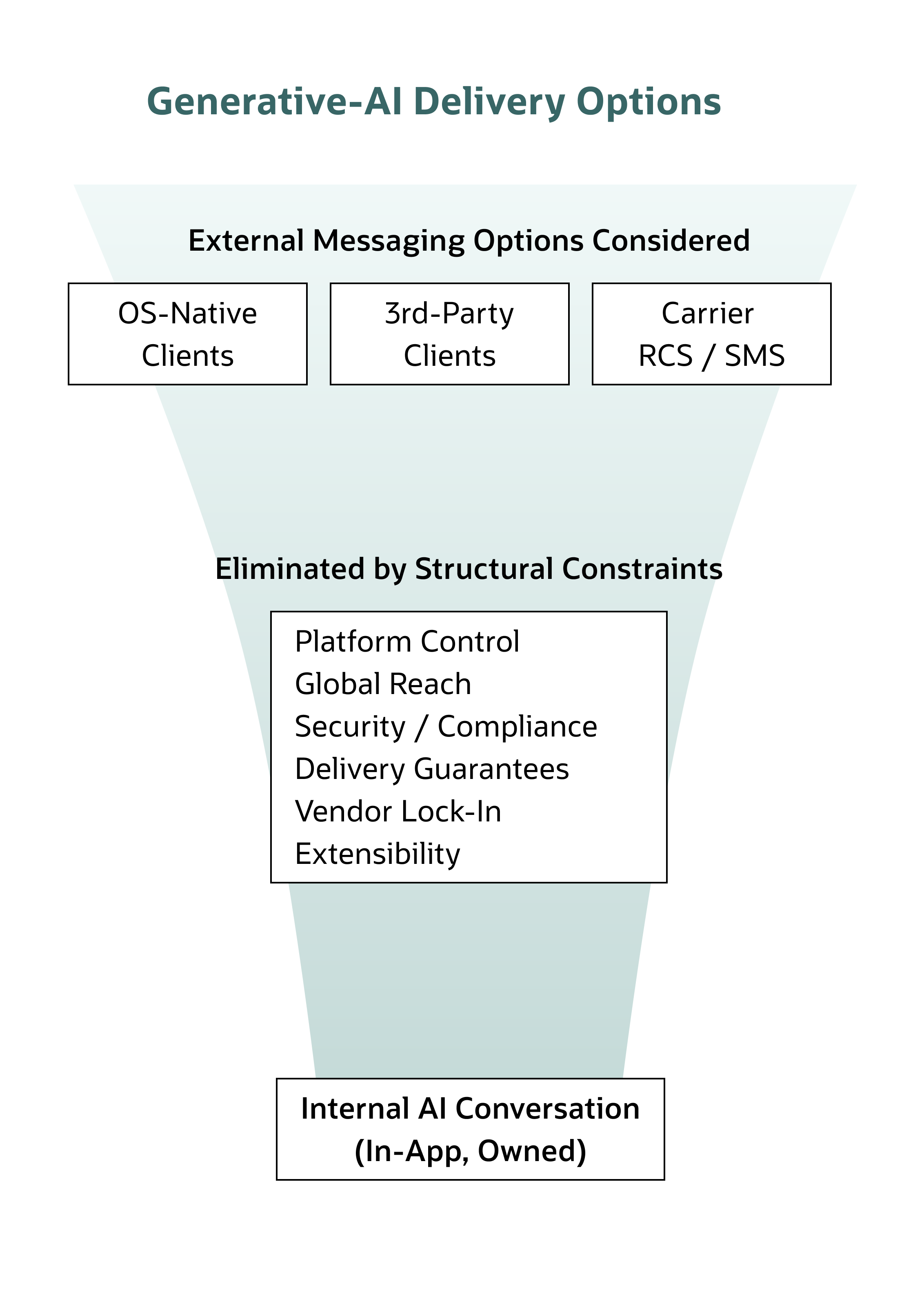
Global reach, protocol fragmentation, vendor lock-in, security, delivery guarantees, and enterprise compliance all presented structural constraints that intuition alone couldn't resolve.
Could we build something that handled all of this satisfactorily? I wasn’t sure.
Had anyone done the work to find out? It turns out, no.
In short, a seductive idea is still a liability if the system can’t support it.
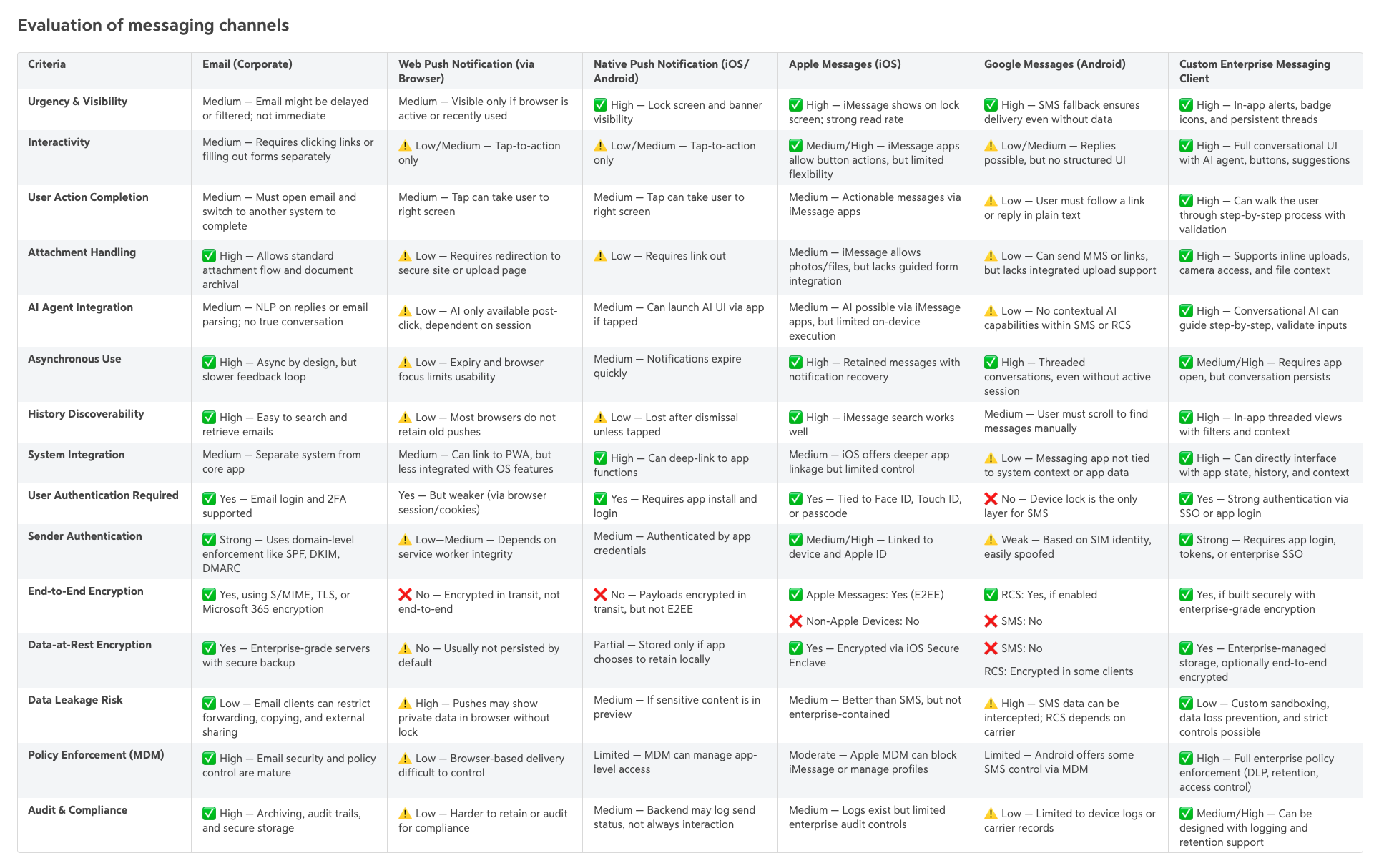
Evaluation criteria for potential generative AI messaging channels
My Approach
Evaluated
Researched messaging apps, protocols, vendors, and backend delivery models
Eliminated
Ruled out external channels that failed at scale, security, or control
Validated
Partnered with platform engineering for independent review
Redirected
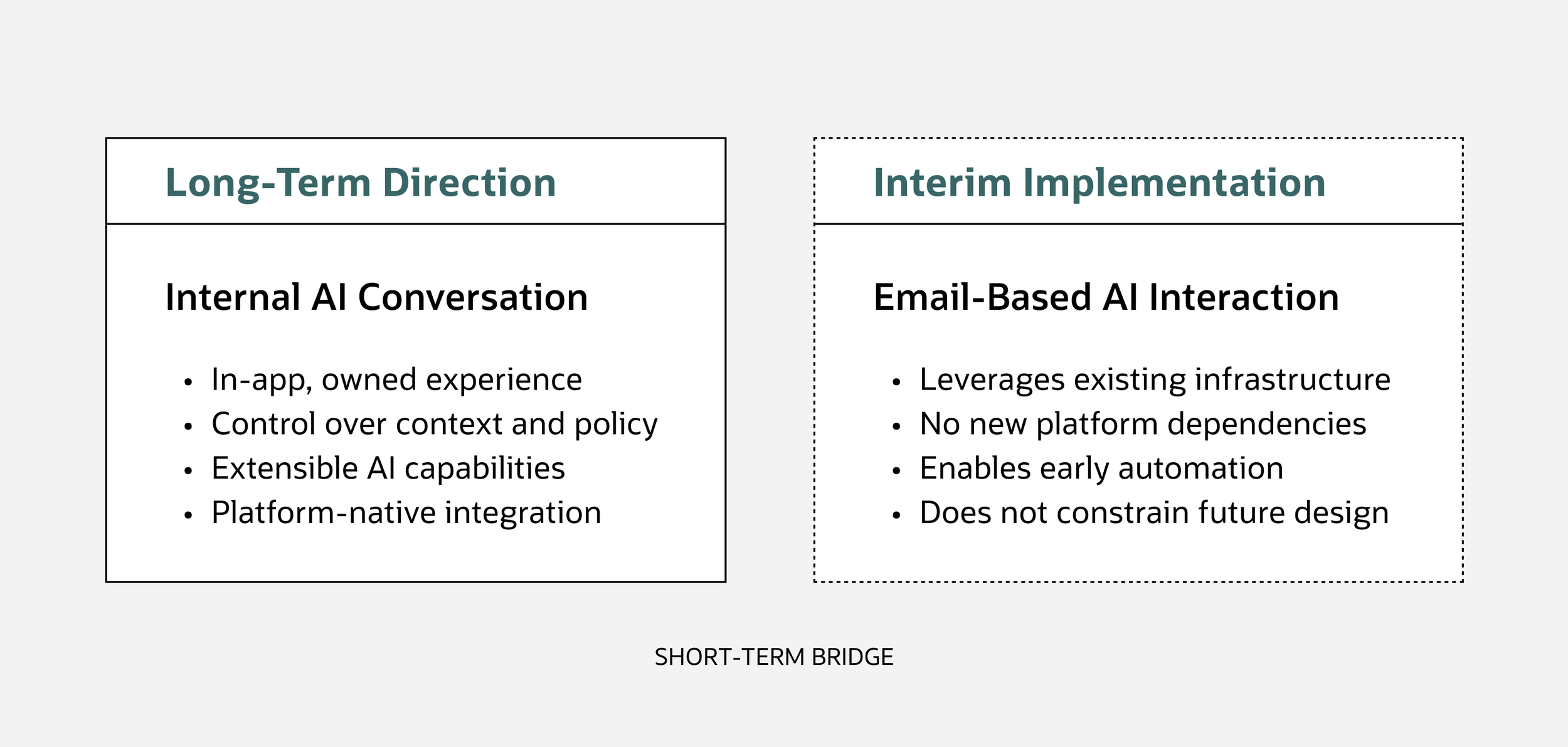
Recommended an internal AI conversation model as the durable path
The goal was to eliminate the wrong ones so the right decision became clear, not to show preference.
The Outcome
The most valuable thing this work produced wasn't a recommendation. It was a decision that leadership could actually stand behind — because the reasoning was visible, the tradeoffs were explicit, and the wrong path had already been ruled out before anyone committed resources to it.
Product leadership aligned on an internal AI conversation model as the long-term direction, with AI-assisted email as a pragmatic interim that didn't contradict that trajectory.